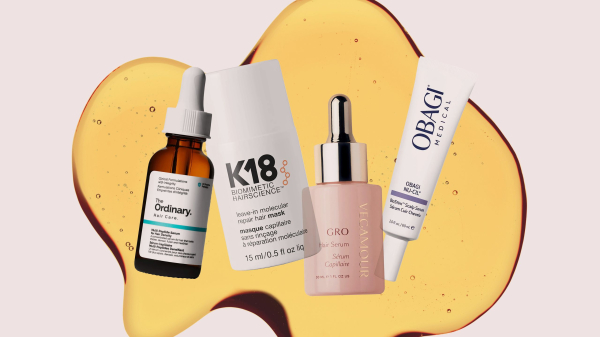
 Collage: Paula Balondo; Source images: Courtesy of brandsSave this storySave this story
While there aren’t any miracle potions (sorry, TikTokers), you may have heard rumors about the best peptide serums being a way to boost hair density and promote healthier growth. The truth is a little fuzzier. With commitment and consistency, they may reduce shedding and make hair look fuller, thicker, and stronger over time, but there’s no evidence just yet that they’re a hair-growth hero.
First, some context: Peptides are short chains of amino acids that act as signaling molecules, essentially “communicating” with hair follicles and scalp cells, says Whitney Hovenic, MD, a board-certified dermatologist based in Reno, Nevada. Depending on the peptide and formula, they might support follicle activity and the hair-growth cycle while improving the scalp environment needed for healthy hair growth.
The keyword here, however, is support. “Think of them as boosters, best used early or alongside other treatments,” says Dr. Hovenic. “They work well for early-stage hair thinning, shedding due to stress or hormonal shifts, and as a preventive method, but are not effective alone for advanced hair loss or scalp diseases where the hair follicles have become inactive.”
In other words, peptide serums aren’t substitutes for clinically proven hair-loss treatments such as minoxidil. But for early thinning, increased shedding, or simply keeping the hair you have looking fuller and healthier, they can be a low-lift addition to your routine.
Our Top Peptide Hair Serums
- Best Overall: The Ordinary Multi-Peptide Serum for Hair Density, $24
- Best for Thinning Hair: Obagi Medical Nu-Cil BioStim Scalp Serum, $125
- Best for Hair Shedding: Vegamour Gro Hair Serum, $64
- Best for Breakage: Briogeo Destined for Density Peptide Hair Serum, $57
Frequently Asked QuestionsLargeChevron
- What do peptide serums do?
- Can peptide serums regrow hair or treat hair loss?
- Are peptide hair serums safe?
- Do peptide hair serums work for all hair types and textures?
- Can peptide hair serums be used with other treatments?
- Meet the experts
- How we test and review products
- Our staff and testers
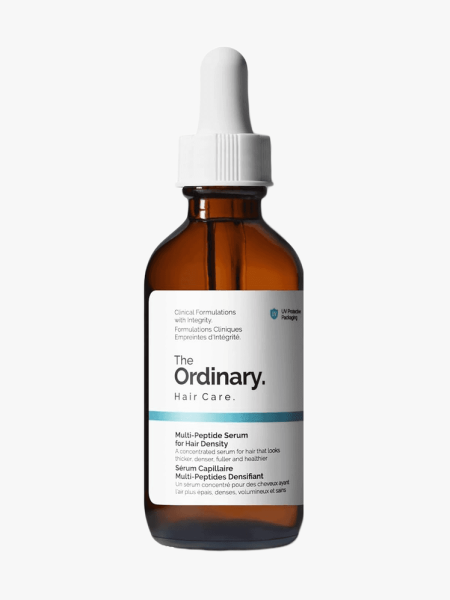
Best Overall: The Ordinary Multi-Peptide Serum for Hair Density
 Save to wishlist
The Ordinary
Multi-Peptide Serum for Hair Density
Amazon
Nordstrom
Ulta Beauty
Why it's worth it: Rather than hinging its formula on a single peptide technology, The Ordinary’s Multi-Peptide Serum for Hair Density brings together four trademarked ingredient complexes that approach thinning hair from slightly different angles. Redensyl pairs larch wood and green tea leaf extracts with amino acids to promote a healthy follicle environment. Procapil brings biotinoyl tripeptide-1 together with botanical ingredients that help fortify follicles and anchor hair at the root, while Capixyl combines acetyl tetrapeptide-3 with red clover extract for stronger, denser-looking hair. Then there’s Baicapil, a blend of baikal skullcap (a flowering plant native to East Asia), wheat germ, and soybean germ extracts intended to encourage a healthy hair-growth cycle. Combining multiple technologies can help “support the appearance of fuller hair from several biological pathways,” says Dara Spearman, MD, a board-certified dermatologist in Fort Wayne, Indiana.
The formula also contains caffeine and green tea extract, which make it a “well-rounded option that targets density, shedding, and overall scalp health,” says Dr. Hovenic. The texture is also a major part of the appeal: The water-based serum absorbs quickly without leaving greasy residue, making it easy to use daily across hair types. Aderonke Obayomi, MD, a board-certified dermatologist in New York City, also points to its fragrance-free formula and “credible multi-mechanism approach at an accessible price point.”
More to know
LargeChevron
- Peptides: biotinoyl tripeptide-1, acetyl tetrapeptide-3
- Other key ingredients: amino acids, Larix europaea (larch) wood extract, Camellia sinensis (green tea) leaf extract, baikal skullcap, wheat germ, soybean germ
- Fragrance-free: yes
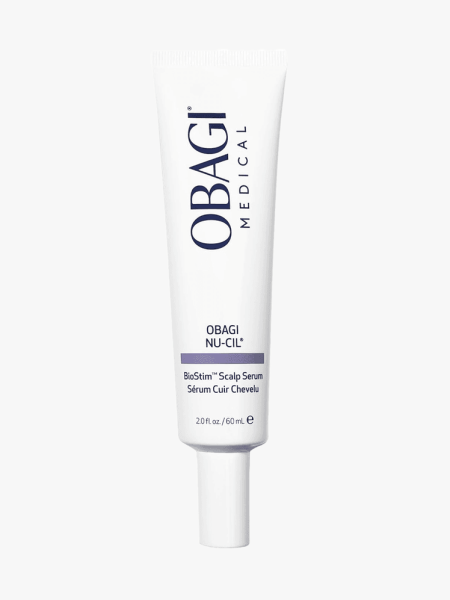
Best for Thinning Hair: Obagi Medical Nu-Cil BioStim Scalp Serum
 Save to wishlist
Obagi Medical
Nu-Cil BioStim Scalp Serum
Amazon
Dermstore
Bluemercury
Why it's worth it: If your ponytail feels a little skinnier than it used to, it’s not always due to an uptick in shedding—rather, each strand of hair might actually be getting thinner. Because of age, hormonal changes, and genetics, follicles can gradually produce finer strands, and that’s where the Obagi Medical Nu-Cil BioStim Scalp Serum comes in. Its BioStim Complex goes beyond peptides alone, pairing biotinoyl tripeptide-1 (a peptide that encourages stronger, healthier-looking hair) with amino acids and a lengthy roster of scalp-nourishing nutrients, including caffeine, niacinamide, panthenol, ginseng, and pumpkin seed extract. The idea behind the formula is to create a “healthier scalp environment around the follicle while helping fortify strands at the root,” says Dr. Spearman.
More to know
LargeChevron
- Peptides: biotinoyl tripeptide-1
- Other key ingredients: caffeine, niacinamide, panthenol, ginseng, pumpkin seed extract
- Fragrance-free: yes
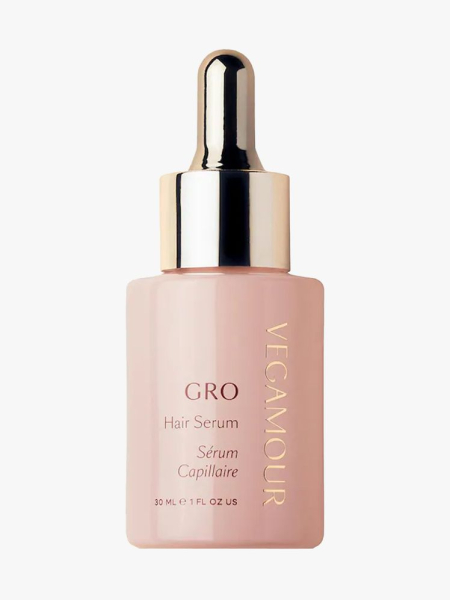
Best for Hair Shedding: Vegamour Gro Hair Serum
 Save to wishlist
Vegamour
Gro Hair Serum
Amazon
Sephora
Why it's worth it: Vegamour’s Gro Hair Serum takes a peptide-meets-plants approach to strengthen strands when you’re dealing with more shedding than usual. The formula pairs three bioengineered peptides and polypeptides—produced using Nicotiana benthamiana, a plant commonly used to make recombinant proteins (lab-made versions of proteins that naturally occur in the body)—with red clover and mung bean sprout extracts, caffeine, and biotin to support the scalp and encourage hair to look fuller and healthier. The lightweight texture also makes it practical for consistent use: “It’s water-based, absorbs quickly, and doesn’t leave the scalp feeling greasy,” says Dr. Obayomi, who recommends it for patients dealing with early thinning or diffuse shedding. Just don’t expect a cosmetic serum to put the brakes on significant hair loss. “It’s not a replacement for minoxidil in clinically significant hair loss, but as an adjunct, or for someone not yet ready for minoxidil, it’s a reasonable starting point,” she says.
More to know
LargeChevron
- Peptides: Nicotiana benthamiana octapeptide-30 sh-oligopeptide-2, Nicotiana benthamiana hexapeptide-40 sh-polypeptide-9, Nicotiana benthamiana hexapeptide-40 sh-polypeptide-86
- Other key ingredients: red clover extract, mung bean sprout extract, caffeine, biotin
- Fragrance-free: yes
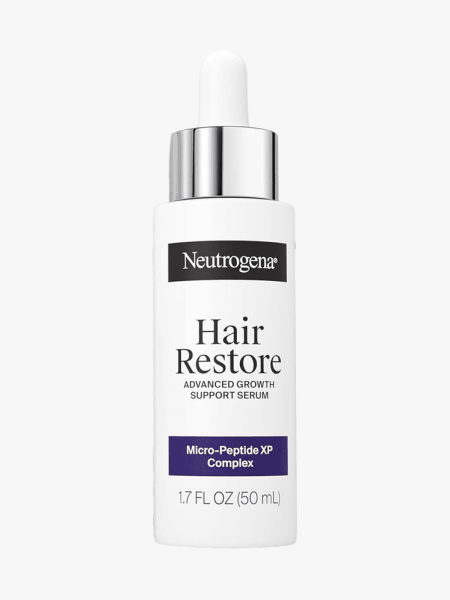
Best for Sensitive Scalps: Neutrogena Hair Restore Serum
 Save to wishlist
Neutrogena
Hair Restore Serum
Amazon
Why it's worth it: Instead of familiar topical peptides such as copper tripeptide-1 or acetyl tetrapeptide-3, Neutrogena’s Hair Restore Serum spotlights acetyl dipeptide-31 amide, a less commonly seen peptide in scalp serums. As a dipeptide—a particularly short chain of just two amino acids—it’s relatively small, which means it “may penetrate the layers of your hair more easily,” says Dr. Obayomi. One important caveat: Better penetration doesn’t automatically mean greater results, since how well a peptide works also depends on what it does once it reaches its target. The water-based formula pairs the peptide with caffeine, niacinamide, arginine, hydrolyzed collagen, and soothing bisabolol to support the scalp. “It’s also lightweight and nongreasy, which minimizes buildup—a helpful benefit for easily irritated scalps,” says Dr. Spearman.
The drugstore availability is also a bonus. “Price point matters for patients who want to stay consistent with a daily scalp serum, since results require months of use,” says Dr. Obayomi. Another plus for sensitive scalps: The fragrance-free formula eliminates one potential source of irritation when you’re applying it directly to your scalp every day.
More to know
LargeChevron
- Peptide: acetyl dipeptide-31 amide
- Other key ingredients: caffeine, niacinamide, arginine, hydrolyzed collagen, bisabolol
- Fragrance-free: yes
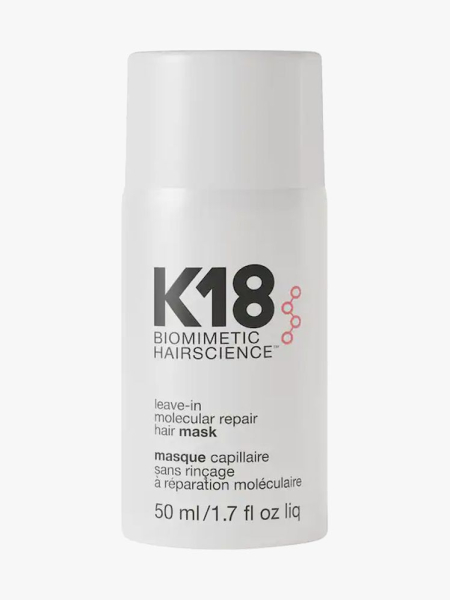
Best for Damage: K18 Leave-In Molecular Repair Hair Mask
 Save to wishlist
K18
Leave-In Molecular Repair Hair Mask
Amazon
Sephora
Why it's worth it: K18’s Leave-In Molecular Repair Hair Mask is so popular among our editors and readers (hence its Readers' Choice Award win in 2024) that it likely needs no introduction. Unlike most of the peptide serums on the list, which focus on the scalp, this one puts its peptide to work inside damaged strands. The star is sh-oligopeptide-78, the peptide behind the brand’s patented K18 peptide technology. It’s a biomimetic peptide, meaning its amino acid sequence mimics a portion of the keratin proteins that make up hair. “It’s particularly useful for people recovering from bleach, color, or heat damage,” says Dr. Obayomi. Hydrolyzed wheat protein and wheat starch provide additional conditioning and temporarily reinforce damaged hair. However, there’s a learning curve involved: “You need to essentially emulsify the product in your hands, then apply, wait a few minutes, then continue to style,” says senior commerce director Shanna Shipin, who adds that it works “seemingly instantly.”
Tester feedback from senior commerce director Shanna Shipin
LargeChevron
“I put my hair through so much—the blow-drying, the flat-ironing, the re-curling!—my split ends were practically visible from outer space. It wasn't until I diligently started using this now-classic leave-in mask that I believed you could actually undo years of damage. You can't use conditioner before applying. Sure, it's a bit finicky, but this stuff works. I got heaps of compliments after using it consistently for a month. People thought my hair was shinier when blown out, and my curls were brought back to life, their pattern restored, their joie de vivre revived!” —Shanna Shipin, senior commerce director
More to know
LargeChevron
- Peptide: sh-oligopeptide-78
- Other key ingredients: hydrolyzed wheat protein, wheat starch
- Fragrance-free: no
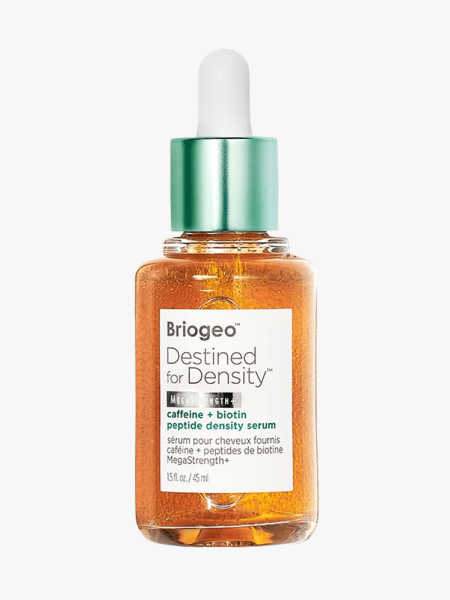
Best for Breakage: Briogeo Destined for Density Peptide Hair Serum
 Save to wishlist
Briogeo
Destined for Density Peptide Hair Serum
Amazon
Nordstrom
Ulta Beauty
Why it's worth it: Dry scalps get a double dose of moisture from Briogeo’s Destined for Density Peptide Hair Serum: Humectants like glycerin, propanediol, betaine, aloe, and panthenol attract and retain water, while emollients, including coffee seed, meadowfoam, sea buckthorn, and jojoba oils, soften and condition. That moisturizing combination can benefit dry, brittle strands, too, since better-lubricated hair creates less friction and potentially less tangling and mechanical breakage during brushing and styling. On the peptide front, the formula contains copper tripeptide-34, a copper-bound peptide geared toward creating a healthier scalp environment, alongside caffeine, niacinamide, ginseng, and biotin. It’s also “fragrance-free and designed with sensitive or reactive scalps in mind, minimizing the risk of redness or buildup,” even with its ingredient-packed lineup, says Dr. Hovenic.
More to know
LargeChevron
- Peptide: copper tripeptide-34
- Other key ingredients: glycerin, propanediol, betaine, aloe, panthenol, and coffee seed, meadowfoam, sea buckthorn, and jojoba oils
- Fragrance-free: yes
Frequently Asked Questions
What do peptide serums do?
Peptide serums may help hair look fuller, but when it comes to actual hair regrowth, they aren’t a replacement for proven hair-loss treatments. “Peptides are short chains of amino acids that act as signaling molecules,” says Dr. Obayomi. When applied to the scalp, certain peptides can send signals that promote follicle function, extend the growth phase of the hair cycle, and strengthen the tissue surrounding the follicle.
Some may have more specific roles: Acetyl tetrapeptide-3, for example, helps reinforce the connective matrix that anchors hair. Still, peptides are better thought of as an assist rather than a standalone hair-growth treatment. “Overall, peptides for hair growth are best thought of as supportive ingredients that can create a healthier scalp environment, rather than a standalone treatment,” Dr. Obayomi says.
Can peptide serums regrow hair or treat hair loss?
“Peptide serums can encourage density and scalp health, and some ingredients have clinical data behind them, but they are not a substitute for evidence-based treatments for diagnosed hair loss,” says Dr. Obayomi. “For conditions like androgenetic alopecia, the gold standards remain minoxidil, finasteride, and in-office treatments like PRP or low-level laser therapy.”
Again, think of peptides as a supporting player: “Peptide serums can be a reasonable adjunct, or a starting point for someone noticing early thinning,” she says. However, if you’re experiencing significant, rapid, or patchy hair loss, Dr. Obayomi recommends seeing a board-certified dermatologist for a proper workup. “Conditions like telogen effluvium, traction alopecia, central centrifugal cicatricial alopecia, and thyroid-related shedding all look different under evaluation and require different treatment plans.”
Are peptide hair serums safe?
For most people, peptide hair serums are considered well-tolerated. “The most common issues are scalp irritation or contact dermatitis, usually from other ingredients in the formula like fragrance or alcohol, not the peptides themselves,” says Dr. Obayomi, who recommends patch-testing a serum on the inner arm before committing to daily scalp use, especially if you have sensitive skin.
During pregnancy and breastfeeding, there’s a little more nuance. “Peptides themselves are generally considered low-risk because they are large molecules with minimal systemic absorption,” she says. However, because hair serums can also contain caffeine, acids, botanicals, vitamins, and other active ingredients, Dr. Obayomi recommends reviewing the entire ingredient list with your ob-gyn before introducing a new product. And one ingredient to steer clear of: “Patients should avoid serums that contain minoxidil during pregnancy and breastfeeding,” she says.
Do peptide hair serums work for all hair types and textures?
Yes, peptide hair serums can be used across hair types and textures. “The active peptides work the same way regardless of hair type,” says Dr. Obayomi. Where hair type does make a difference is in choosing and applying the formula. For textured or curly hair, she recommends lightweight, water-based serums applied directly to the scalp in sections to avoid disrupting your curl pattern or styling, while oily or fine hair generally fares better with nongreasy, fast-absorbing formulas.
If your hair is particularly dry or damaged, “pairing a scalp-focused peptide serum with a bond-repair peptide treatment for the hair itself” can address both concerns, she says. Ultimately, “there’s no one-size-fits-all, and the right formula is the one a patient will actually use consistently for three to six months, which is the realistic window for seeing results.”
Can peptide hair serums be used with other treatments?
Yes, peptide serums can generally be layered with other hair-growth serums and treatments, including minoxidil, because they work through different mechanisms. “Minoxidil increases blood flow to stimulate growth, while peptides boost follicle health and longevity,” says Dr. Hovenic.
Rather than applying everything at once, she recommends separating topical treatments, for example, using a peptide serum in the morning and minoxidil at night to minimize potential interference and irritation. Peptide serums can also complement oral hair-growth medications. “If you are taking oral medications to help with hair growth, peptides can be added to the scalp to contribute to the benefits of these medications,” she says. However, if you’re treating diagnosed hair loss, it’s always worth checking with your dermatologist before adding another product to your regimen.
Meet the experts
- Whitney Hovenic, MD, is a board-certified dermatologist and cofounder of Spooge in Reno, Nevada.
- Aderonke Obayomi, MD, is a board-certified dermatologist and assistant professor at Mount Sinai Hospital in New York City.
- Dara Spearman, MD, is a board-certified dermatologist and the owner of Radiant Dermatology Associates based in Fort Wayne, Indiana.
How we test and review products
When Allure tests a product, our editors look at it from every angle in an effort to best serve you. We review ingredients, scrutinize brand claims, and, when necessary, examine peer-reviewed scientific and medical studies. In addition to testing each and every product that’s included in each and every review, we rely on experts who shape their fields, including dermatology, cosmetic chemistry, and medicine, to help us vet the ingredients and formulas.
For our list of the best peptide hair serums, we considered each product’s performance across five primary categories: product ingredients and efficacy, packaging, fragrance, texture, and product wear. Every product was determined to have excelled in each category by our editorial team, which is composed of in-house writers and editors as well as contributors—along with special consideration from makeup artists. To learn more information about our reporting and testing processes, read our complete review process and methodology page.
Our staff and testers
A beauty product is a personal purchase. You might be searching for a face cream to address persistent dryness or a new nail product to add to your Sunday self-care routine; you may simply be browsing around for the latest launches to hit the hair market. No matter what you seek or your individual needs and concerns, Allure wants to ensure that you love anything we recommend in our stories. We believe that having a diverse team of writers and editors—in addition to the wide range of outside testers and industry experts we regularly call upon—is essential to reaching that goal.
After all, can we really say a skin-care product is the "best" for people over 50 if the only testers we've solicited opinions from are folks who have yet to hit 30? Can we honestly deem a high-end diffuser worthy of your hard-earned cash if it’s never been tested on curls? We're proud that our staff spans a wide range of ages, skin tones, hair textures, genders, and backgrounds, which means that we are able to fairly assess any beauty product that comes into the beauty closet.